
CRYPTO
Kevin Warsh and the Fed: 5 Major Changes If He Becomes Chair
May
The Federal Reserve is currently operating in a fragile equilibrium where inflation is not fully anchored, while U.S. growth and labor market conditions remain uneven across sectors and cycles.
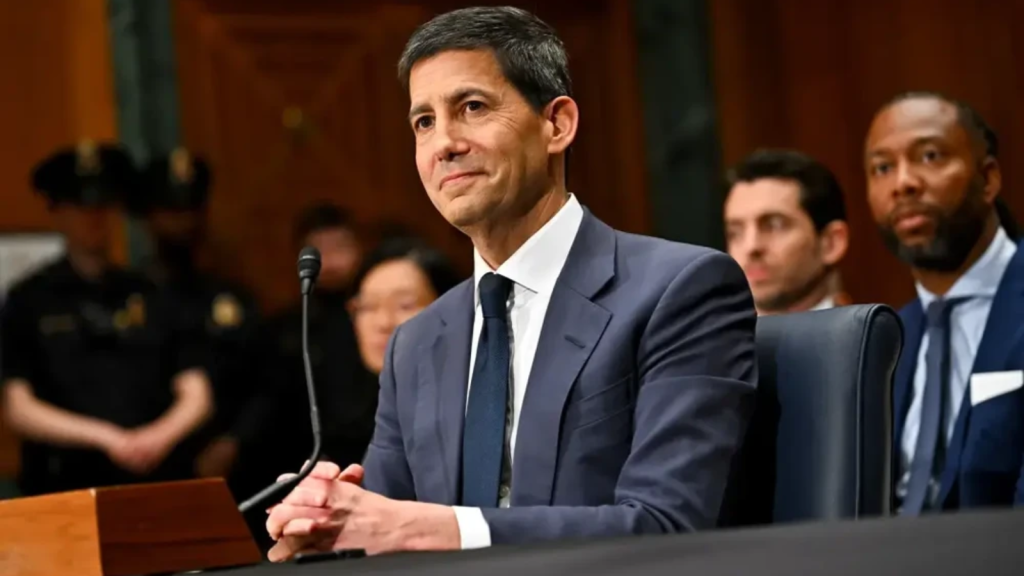
Kevin Warsh is a former Fed Governor and is widely discussed as a potential candidate for the Fed Chair position, as markets reassess not only interest rates, but also liquidity conditions and the Fed’s balance sheet framework.
1. The Fed is not just about interest rates
In practice, the Federal Reserve influences financial conditions through three main channels: policy rates, balance sheet operations, and forward guidance.
The key point is that liquidity driven by balance sheet expansion or contraction can, in many cycles, have a stronger impact on risk assets such as equities and crypto than the nominal level of interest rates itself.
2. Kevin Warsh’s policy framework
Kevin Warsh’s policy stance can be summarized around three core principles:
- Prioritizing inflation control over short-term growth optimization.
- Reducing the Federal Reserve’s direct market intervention.
- Maintaining a cautious view on large-scale quantitative easing (QE) programs.
The implication is a structural shift toward a less interventionist Fed, with a stronger focus on price stability as the central objective.
3. Interest rates: less shock, more data dependence
If Warsh were to lead the Federal Reserve, interest rate policy would likely remain data-dependent rather than driven by aggressive or pre-committed easing cycles.
The more likely path is:
- gradual adjustments aligned with inflation and labor data,
- avoidance of abrupt policy shifts,
- reduced probability of large, fast rate cuts unless macro conditions justify them.
Market implication:
Interest rates would likely become a less volatile driver of major asset repricing unless inflation dynamics change significantly.
4. The balance sheet as the key policy variable
The Fed’s balance sheet, accumulated through multiple QE cycles, has become a critical determinant of system-wide liquidity.
A policy of balance sheet reduction implies:
- a gradual decline in Fed-held securities,
- lower liquidity in the banking system,
- reduced structural support for risk assets.
Key market implication:
Crypto and equities tend to respond more strongly to liquidity conditions than to nominal interest rates. Therefore, balance sheet tightening can exert downward pressure on risk assets even in a stable rate environment.
5. Policy communication and market volatility
Forward guidance is currently a major tool used by the Fed to shape market expectations.
If this guidance is reduced:
- markets will rely more heavily on incoming economic data,
- policy expectations will become less anchored,
- short-term volatility across asset classes may increase.
Market implication:
USD, Treasury yields, equities, and crypto could experience sharper reactions to macro data releases rather than Fed communication signals.
6. Institutional constraint: the Fed Chair is not a single decision-maker
The Federal Open Market Committee (FOMC) consists of 12 voting members.
This structure means:
- monetary policy is set collectively,
- the Chair’s role is primarily coordination and agenda-setting,
- no single individual can unilaterally determine policy direction.
7. Scenario analysis: if Kevin Warsh leads the Fed
If Kevin Warsh becomes Fed Chair, the most likely policy shifts would be structural rather than directional.
Expected changes include:
- Interest rates: no aggressive or abrupt cutting cycle; continued data-driven adjustments.
- Balance sheet: gradual tightening, leading to reduced system liquidity.
- Communication: reduced forward guidance, increasing market dependence on macro data.
Conclusion: Where the real impact would come from
The most important impact of a potential Warsh-led Federal Reserve would not be the level of interest rates itself, but how monetary policy is transmitted into financial markets.
For investors in traditional markets and crypto, the key variables to monitor would be:
- system liquidity conditions,
- the pace of balance sheet adjustment,
- and the degree of Fed guidance embedded in market expectations.
In other words, if Kevin Warsh becomes Fed Chair, the biggest shift is not “how much the Fed cuts rates,” but “how the Fed shapes expectations and liquidity conditions.”
